
Print on Demand pricing strategies shape how customers perceive value, influence demand, and determine growth trajectories in busy online marketplaces, making careful price design essential for long-term profitability, competitive positioning, and sustainable scale across apparel, home decor, mugs, and other POD products. To navigate this, smart POD pricing models blend cost-based foundations with value signals, so you can optimize print on demand profit optimization while preserving affordability and perceived fairness. Dynamic pricing for POD can capture peak demand without eroding trust, while tiered pricing and bundles unlock higher baskets and diversified customer segments. Adhering to POD pricing best practices, clear value communication, consistent rules across channels, and data-driven testing, helps you refine pricing strategies for print on demand. This introductory framework equips you to apply a balanced, disciplined approach that aligns margins with customer value and fuels repeat purchases over time.
Seen through an LSI-informed lens, you can discuss the same topic using alternative terms such as pricing frameworks for on-demand printing, value-driven price signaling, and revenue optimization for customizable products. These semantic neighbors refer to the same core objective: allocating value between producer and customer by balancing costs, differentiation, and willingness to pay. A practical way to structure this discussion is to map cost layers, demand signals, seasonality, and channel differences into a coherent price architecture. By embracing terms like POD cost and pricing structure, on-demand pricing tactics, and dynamic revenue management for customized goods, you reinforce SEO while keeping content accessible and informative. This cross-channel coherence supports clearer messaging and stronger conversions.
Understanding POD Pricing Models and Their Role in Print on Demand Pricing Strategies
Pricing for print on demand (POD) isn’t a single formula—it’s a spectrum of pricing models designed to balance profitability with customer appeal. Common POD pricing models include cost-plus approaches, value-based pricing, tiered options, bundles, and dynamic adjustments. Understanding each model helps you align your strategy with your brand and product mix, while also supporting print on demand profit optimization. By recognizing how different models interact with costs, demand, and perceived value, you can craft a hybrid approach that fits apparel, home decor, mugs, and other POD items.
The sweet spot for many POD sellers isn’t a rigid rule but a blended framework. Start with a reliable cost-plus baseline to protect margins, layer on value-based elements for high-demand designs, and leverage bundles or dynamic pricing to optimize conversions during peak periods. This approach aligns with broader POD pricing best practices and pricing strategies for print on demand, ensuring you capture value from design, production, and customer lifetime value without sacrificing competitiveness.
Building a Solid Cost Baseline: Materials, Fees, and Margins
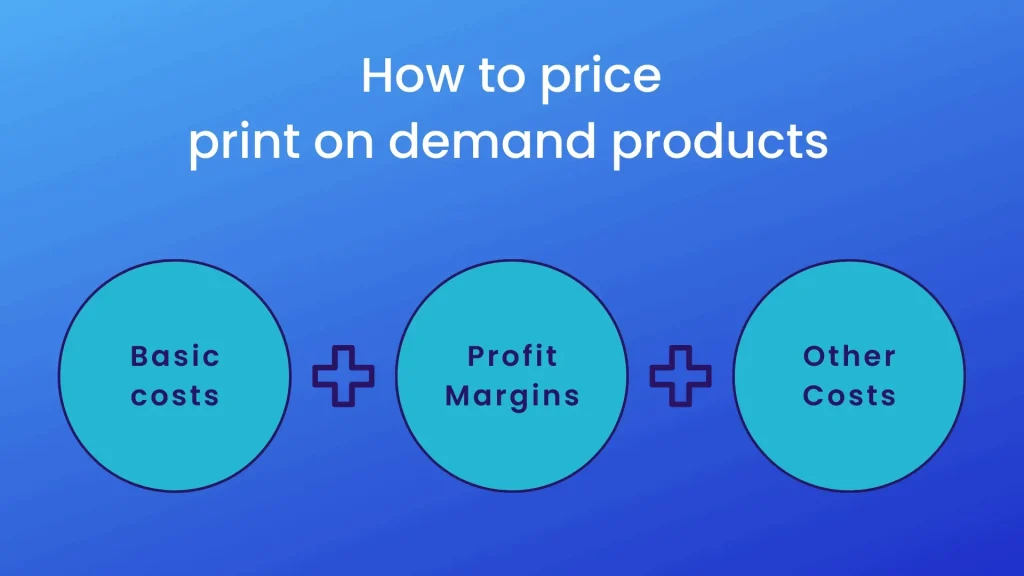
Before you can price effectively, you must quantify both value and costs. In POD pricing, this means accounting for material and production costs per item, platform or fulfillment fees, shipping, packaging, and transaction costs. Margins aren’t only about a markup; they must also cover time spent on design, marketing, customer service, and returns. Establishing a thorough cost baseline sets the foundation for sustainable pricing and supports print on demand profit optimization.
From there, derive a target profit per unit and a baseline price you’re willing to defend in the market. Include a cushion for returns and a reasonable annual profit target. With a solid cost baseline, you can apply a mixed pricing approach—cost-plus as the floor, with value-based adjustments for standout designs and bundles—while keeping in mind the broader POD pricing elements and strategies that drive long-term profitability.
Dynamic Pricing for POD: When and How to Adjust Prices
Dynamic pricing for POD is about responsive pricing, not price gouging. Use it when product differentiation, seasonality, complex designs, or strong demand signals justify higher points, and when competitive dynamics call for more agile positioning. This aligns with the concept of dynamic pricing for POD, which seeks to maximize margins during peak periods while preserving demand during slower times.
Implement practical, data-driven practices to tune prices responsibly. Run controlled experiments, monitor conversions and average order values, and avoid drastic, frequent swings. Communicate the value clearly in product descriptions and highlight design quality or exclusivity when raising prices. Time-bound adjustments—with clear end dates for promos—help manage expectations and support ongoing adherence to POD pricing best practices.
Bundles, Tiered Pricing, and Value Communication
Bundling and tiered pricing are powerful levers in POD pricing strategies. By packaging items—such as a T-shirt with a mug or a themed collection—you can raise perceived value and lift average order value while maintaining healthy margins. Bundles also support pricing strategies for print on demand by encouraging multi-item baskets without dramatically increasing per-item pricing.
Tiered pricing and upselling give buyers clear paths to purchase at different value points. Offer entry and premium tiers, include limited editions or exclusive colorways, and use bundles to incentivize higher baskets. Communicate value through materials, design uniqueness, and brand storytelling to preserve perceived value, while applying pricing best practices that ensure each tier remains attractive and profitable.
Measure, Test, and Optimize: KPIs, Tools, and Case Insights
Effective POD pricing relies on measurable results. Track metrics such as conversion rate, average order value (AOV), margin per SKU, and customer lifetime value (LTV) to understand the impact of pricing decisions. Regular competitor benchmarking and promotion ROI analysis help refine your approach and support print on demand profit optimization.
Adopt a disciplined testing and iteration process. Use A/B tests or time-bound price trials to gauge responses, monitor key performance indicators (KPIs) like CRO and CTR, and adjust base prices and bundles based on learnings. With a systematic approach to measurement and optimization, you’ll continuously improve pricing strategies for print on demand and better balance margins with customer value.
Frequently Asked Questions
What is a practical approach to pricing in print on demand using POD pricing models?
There isn’t a single best method. use a hybrid approach: start with a complete cost baseline (production, platform fees, shipping), set a target margin, then layer in value-based elements for popular designs and use bundles to boost average order value. This aligns with POD pricing models and print on demand profit optimization.
How can I apply dynamic pricing for POD without damaging customer trust?
Dynamic pricing for POD should be data-driven: implement small, controlled price changes tied to demand signals, seasonality, and stock levels. Clearly communicate value in product descriptions and use time‑bound promotions to manage expectations. Follow POD pricing best practices to avoid price shock and maintain conversions.
How do bundles and tiered pricing fit into pricing strategies for print on demand?
Bundles and tiered pricing help capture value across segments. Create price tiers for variants or bundles (e.g., shirt alone, shirt+mug, themed collections) to raise average order value. This approach is central to pricing strategies for print on demand and leverages effective POD pricing models.
What metrics should I track to improve print on demand profit optimization?
Track margin per SKU, total production and platform costs, conversion rate, average order value, customer lifetime value, and promotion ROI. Run controlled price tests to gauge impact and adjust accordingly, aligning with print on demand profit optimization and pricing best practices.
How should I price limited edition or high-demand POD designs to balance value and margins?
Use value-based pricing with scarcity signals and price anchoring. Consider dynamic pricing for POD during demand surges but maintain clear value communication. Run small experiments and establish price tiers to protect margins while sustaining demand, in line with pricing strategies for print on demand.
| Theme | Key Points |
|---|---|
| Introduction | Pricing affects demand, margins, and growth; the goal is to capture value from designs and production costs while keeping price points attractive for repeat customers. Applies across POD items like apparel, home decor, mugs. |
| Value Proposition & Costs | Quantify material costs, platform base fees, printing complexity, storage, shipping, and transaction costs. Margins must cover design, marketing, customer service, and returns while delivering perceived buyer value. |
| Target Profit & Baseline Price | Compute per-item costs (production, platform/processing), per-unit advertising/marketing, packaging/fulfillment, returns cushion, and annual profit target. Derive baseline price and use models to optimize margins. |
| Pricing Models | No single best price. Use a mix: Cost-Plus, Value-Based, Tiered, Bundle/Upsell, and Dynamic. Often a hybrid base with value-led adjustments and bundles. |
| Dynamic Pricing: When to Use | Not price gouging; rely on price elasticity. Use when: product differentiation, seasonality/trends, design complexity, strong demand signals, or competitive landscape changes. |
| Best Practices for Price Tuning | Data-driven tests; monitor conversions and AOV; be mindful of small, incremental changes; justify price increases with value; use time-bounded price adjustments when needed. |
| Framework to Set Prices | 1) Cost Baseline 2) Target Margin 3) Value Signals 4) Market Check 5) Price Point Tiers 6) Test & Iterate 7) Optimize Continuously |
| Bundling & Perceived Value | Bundles and themed collections raise perceived value and AOV without drastically increasing per-item price (e.g., T-shirt + mug, limited edition sets, themed bundles). |
| Psychology, Metrics & Common Mistakes | Pricing psychology: price anchoring, charm pricing, odd-even pricing, and price ranges. Track conversions, AOV, margin per SKU, LTV, competitor benchmarking, and promo ROI. Common mistakes include overpricing evergreen items, underpricing limited editions, channel pricing inconsistencies, ignoring shipping costs, and not testing. |
Summary
Print on Demand pricing strategies require a balanced approach that considers costs, value perception, and market dynamics. A sound framework combines cost-based baselines with value-driven adjustments, dynamic pricing where appropriate, and strategic bundles to boost average order value. By testing, measuring, and communicating value clearly, POD sellers can grow margins, sustain demand, and deliver fair prices across apparel, home decor, mugs, and other POD items.